The scholar
Born outside the order
London · 1922
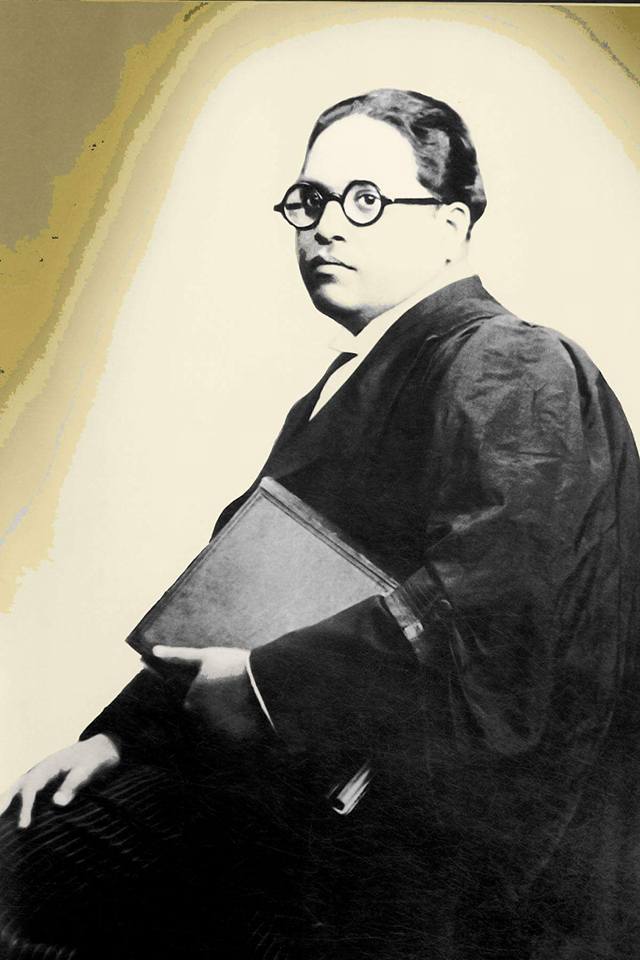
Born into a Mahar (then 'untouchable') family in 1891; took doctorates at Columbia and the LSE and was called to the Bar — the most credentialled man in the room, kept outside it by birth.
Babasaheb Ambedkar · 1891–1956
Jurist, economist, and chief architect of the Constitution's drafting — born outside the graded order, he met scripture with citation and answered the old code by helping to write the new one. A life in seven plates.
The scholar
London · 1922
Born into a Mahar (then 'untouchable') family in 1891; took doctorates at Columbia and the LSE and was called to the Bar — the most credentialled man in the room, kept outside it by birth.
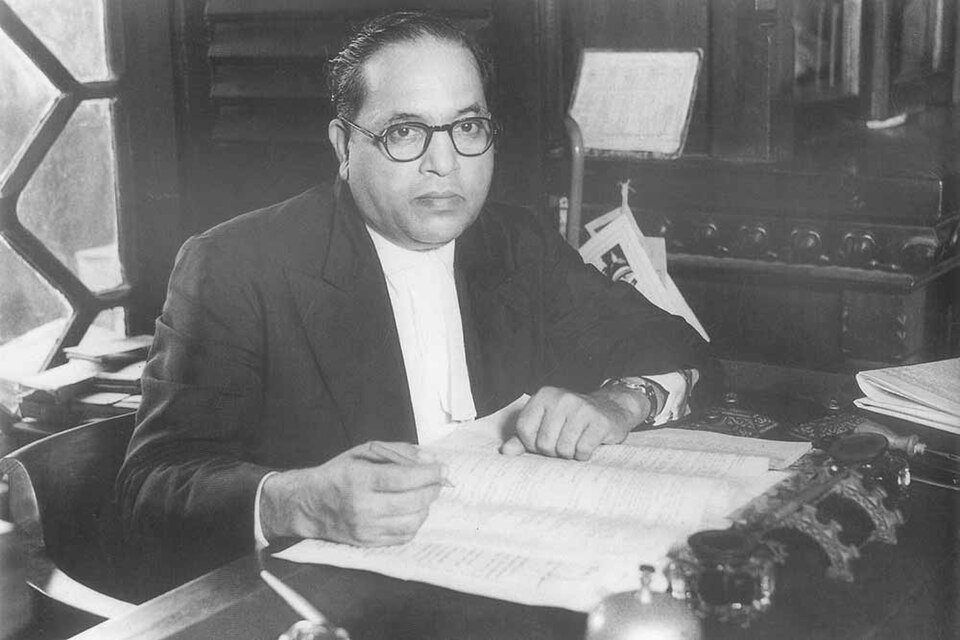
The jurist
c. 1950
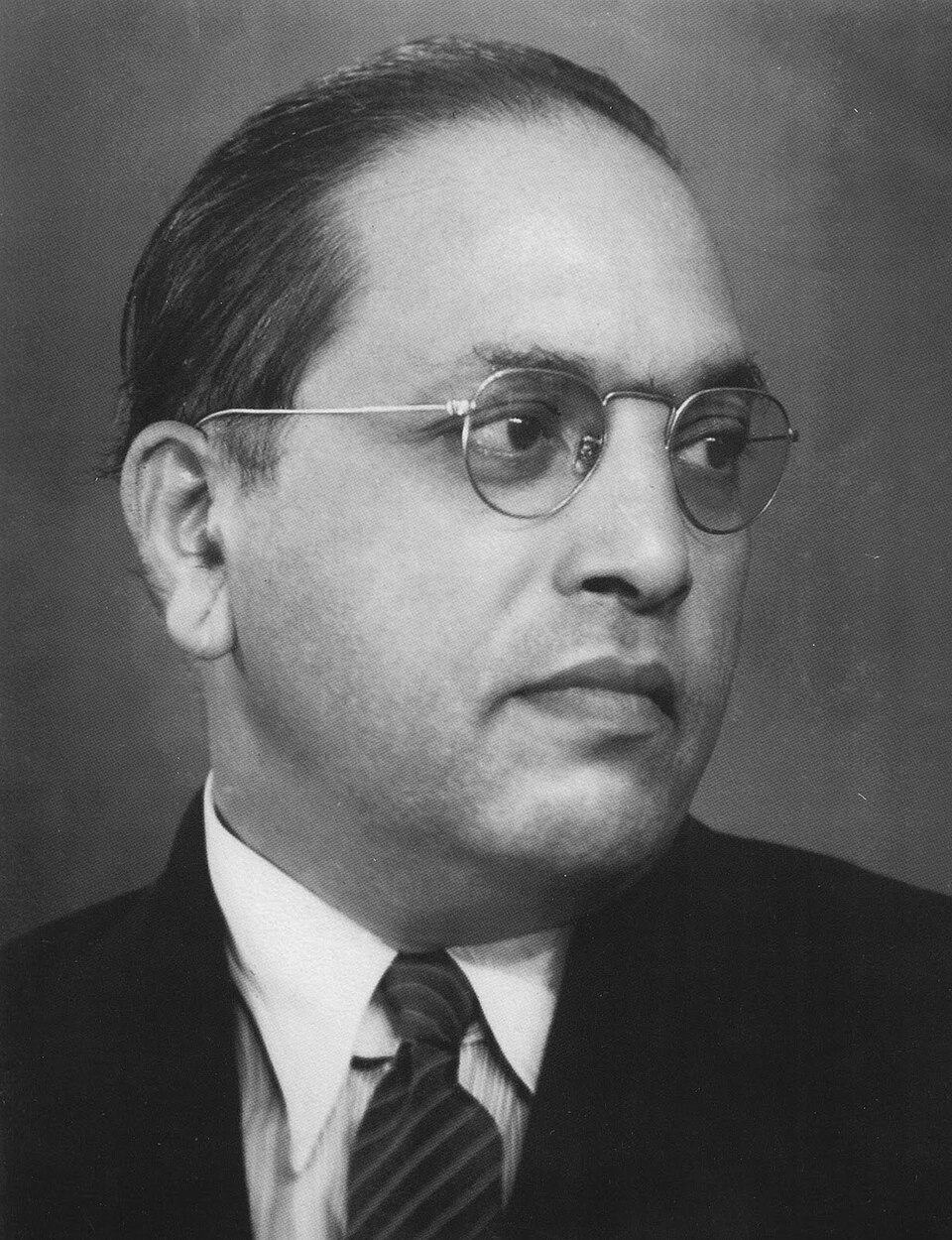
The suit, the books, the wire-rimmed glasses: the iconography of a man who insisted the fight was with the Shastras that taught caste, not the people who observed it.
1928 · Testimony
Bombay · 23 Oct 1928
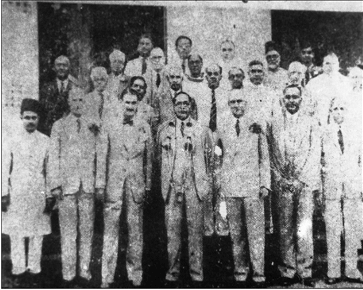
As the boycott cried 'Simon Go Back', Ambedkar testified — pressing the case for separate political representation for the Depressed Classes.
1947–49 · The drafting
Constituent Assembly
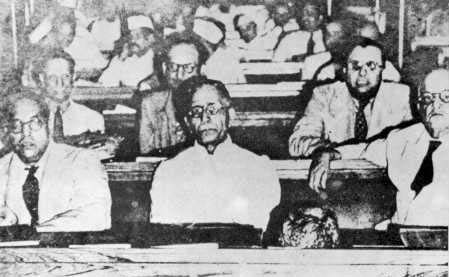
He steered the text that inverted the old order — equality (Art. 14), non-discrimination (15), the abolition of untouchability (17).
25 Nov 1949 · Handover
Constituent Assembly
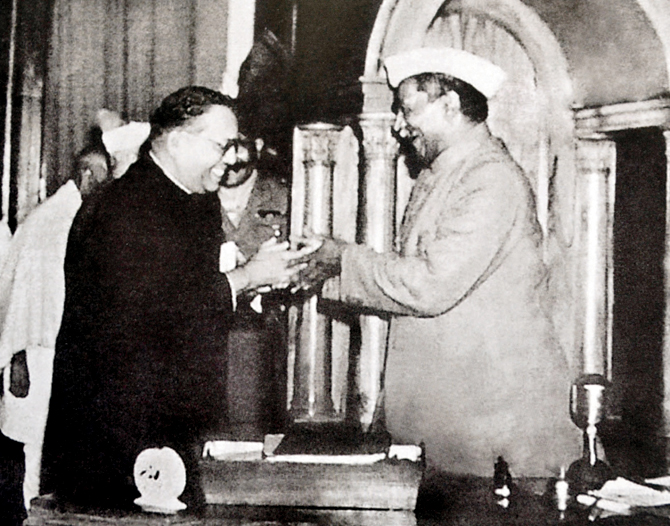
Three years' labour, handed over — in force 26 January 1950. The code that replaced the one he had burned at Mahad in 1927.
The reader
His own library
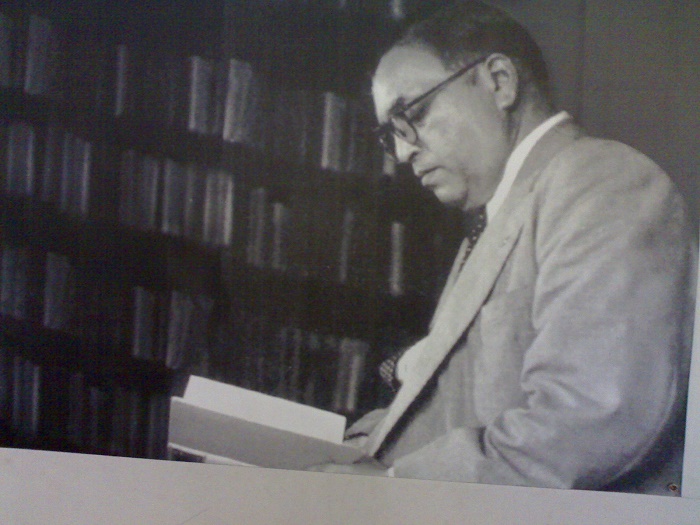
His writings entered the public domain in India in 2017 (life plus sixty years), so we can quote him directly. The reading map below is a way in.
1956 · The exit
1950
He resigned as Law Minister in 1951 over the stalled Hindu Code Bill, and weeks before his death in 1956 converted to Buddhism with lakhs of followers — the exit he had long argued for.
Read further
Dr. Babasaheb Ambedkar: Writings and Speeches (BAWS) runs to 17 volumes, compiled by the Government of Maharashtra and freely available online. This is a reading map, not a copy — every entry links out to the free scans. Start with the distinction most often blurred.
Ambedkar wrote two separate books about two separate categories, and they are constantly conflated. Who Were the Shudras? (1946) asks how the Shudras — the fourth varna, inside the system — came to be degraded. The Untouchables: Who Were They and Why They Became Untouchables? (1948) is about a different group entirely: those placed outside the four varnas. Two books, two categories. Keeping them apart is the first step to reading him accurately.
Ambedkar's writings entered the public domain in India in 2017 (life plus sixty years), so we can quote him directly. Two passages from Annihilation of Caste (1936) carry this whole site in his voice.
The Caste System is not merely a division of labourers which is quite different from division of labour — it is a hierarchy in which the divisions of labourers are graded one above the other.
The enemy you must grapple with is not the people who observe Caste, but the Shastras which teach them this religion of Caste. … The real remedy is to destroy the belief in the sanctity of the Shastras.
The second line is the two-codes thesis in his own hand: the target is the code, not the people — which is why he burned the Manusmṛti in 1927 and drafted its replacement in 1949. See Objections.
The undelivered address. His most direct case that caste cannot be reformed piecemeal — it must be annihilated, and that means confronting the scriptural sanction behind it.
On the Shudras as a once-included varna later degraded — and a book in which he explicitly rejects the Aryan-race theory of caste.
A separate inquiry into the origins of untouchability as a distinct status outside varna. Read alongside — not merged with — the Shudra book.
His constitutional blueprint submitted to the Constituent Assembly — safeguards for minorities and the framework that fed into the drafting.
His final work, published posthumously — the culmination of his turn to Buddhism as an exit from caste.
The 17 volumes collect his books, unpublished manuscripts, evidence to commissions, legislative and Constituent Assembly speeches, and journalism. Volume groupings and contents are documented in the published edition; a few attributions vary between printings and are checked before being asserted here.
We link and credit the free archives rather than reproducing them. See Sources and Method on our copyright policy.