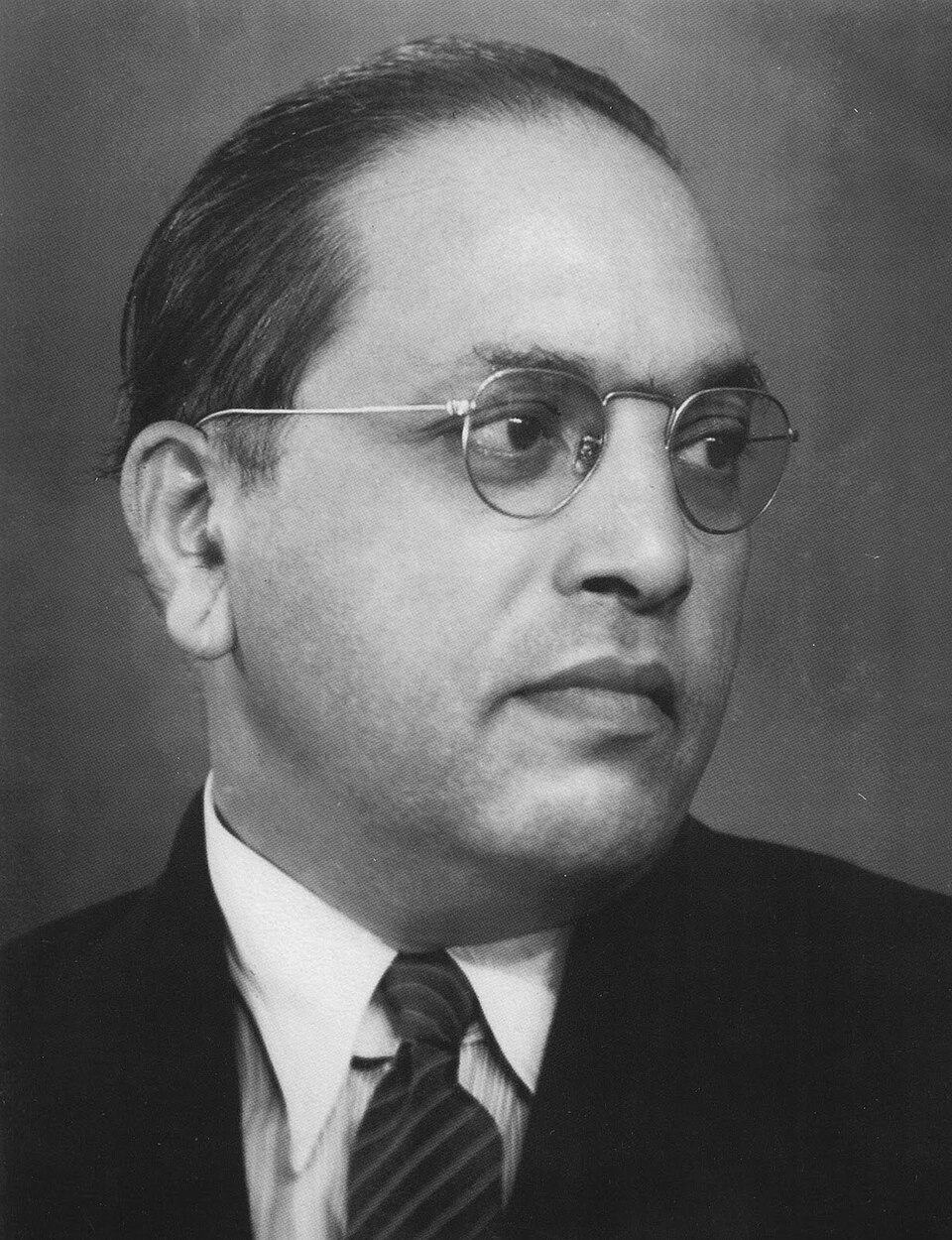
This site’s spine is Manu versus the Constitution. But it would be a half-truth to leave it there, because the Constitution was not written only against the old religious order. It was written against the new ones too — the religiously-defined nations that were live, competing options in the 1940s. Ambedkar fought a war on two fronts, and it is the most evenhanded thing about him.
Two rival theocracies were on the table
By the 1940s, two visions of a nation-by-religion were being seriously advanced:
- A Hindu Rashtra — a polity defined by Hindu-ness. Savarkar’s Hindutva (1923) drew the boundary of the nation around those for whom India was both fatherland and holy land; Golwalkar’s Bunch of Thoughts (1966) would later argue the same, and the RSS Organiser wanted the new Constitution to honour Manu.
- An Islamic Pakistan — Iqbal’s 1930 Allahabad address to the Muslim League envisioned the Muslim-majority north-west consolidated into a single Muslim state; Jinnah’s two-nation theory and the 1940 Lahore Resolution turned it into a demand.
Both defined citizenship, ultimately, by faith. Both are exactly the kind of graded, birth-or-belief-based order the Constitution’s equality was designed to refuse.
Ambedkar against the Hindu Rashtra
No one needs convincing that Ambedkar opposed Brahminism. But he was just as explicit about its political form. In Pakistan or the Partition of India (1940) — now public domain — he wrote, and the words are his own:
If Hindu Raj does become a fact, it will, no doubt, be the greatest calamity for this country… Hindu Raj must be prevented at any cost.
[Documented] His reason was the one this whole site turns on: “Hinduism is a menace to liberty, equality and fraternity… it is incompatible with democracy.” A nation ruled in Manu’s spirit was, to him, a catastrophe to be stopped.
Ambedkar against the religious state on the other side
Here is the part that makes him credible rather than partisan: he applied the same test to the Muslim League, and did not flinch. In the same book he wrote:
Islam divides as inexorably as it binds… The brotherhood of Islam is not the universal brotherhood of man. It is the brotherhood of Muslims for Muslims only.
[Documented] He dissected the two-nation theory at book length, was scathing about communalism in both communities, and initially urged not partition but “the abolition of the Muslim League and the formation of a mixed party of Hindus and Muslims.” He wanted no theocracy — not a Hindu one, not a Muslim one.
Why this is the opposite of a partisan point
It would be easy to misread this essay as “both religions are bad.” That is not the claim, and the distinction matters. Ambedkar’s target was never Hindus or Muslims as people; it was the principle of a polity that grades rights by birth or belief — whether the grading is by varna in the Dharmaśāstra, by Hindu-ness in the Rashtra idea, or by faith in a religious state. Every such order ranks people before the law. The Constitution’s Articles 14, 15 and 25 refuse the ranking itself: equality before the law, no discrimination on religion or caste, freedom of conscience for all.
[Debated] People argue endlessly about which theocracy would have been worse. This site takes no side in that, because it is the wrong question. The point is that Ambedkar — and the document he drafted — rejected the category.
The real shape of the two codes
So the contest is not, and never was, Hindu versus Muslim. It is graded hierarchy versus equal citizenship. The old code (Manu) ranked people by varna; the rival nationalisms of the 1940s would have ranked them by religion; the Constitution ranks them not at all. That is why the same man burned the Manusmṛti in 1927, warned that Hindu Raj “must be prevented at any cost,” took apart the Muslim League’s communalism, and then drafted a Constitution that belongs to a citizen of any faith or none.
If you want to know who fought for the real cause, that is the test: not whose religion wins, but whether anyone’s religion gets to rule the rest. Ambedkar’s answer, and the Constitution’s, was no.