This site is built around Ambedkar, and for good reason. But it would be a distortion of its own — a hero-worship Ambedkar himself warned against — to suggest he was the only one dismantling the old code. In the South, a very different figure took a very different road, and arrived earlier.
Two roads out of caste
Ambedkar’s road was legal and national: a Dalit jurist working through the courts and the Constitution to write caste out of the law. Periyar’s road was cultural and regional: a non-Brahmin rationalist working through mass mobilisation, ridicule, and eventually the ballot to break Brahmin social and political dominance in the Tamil country. Same enemy; opposite methods.
The non-Brahmin grievance
The southern movement began from a documented imbalance. In the Madras Presidency, Brahmins were a small share of the population yet held the overwhelming majority of government posts and university places. In 1916 the South Indian Liberal Federation — the Justice Party — formed to contest that dominance, and once in provincial office it introduced the Communal Government Order of 1921, reserving posts for non-Brahmin communities.
[Documented] That order is why, on this site’s timeline, the South “went first”: caste-based reservation existed in Madras decades before the Constitution made it national. The idea the North fought over after Mandal was already old in the South.
Periyar and the Self-Respect Movement
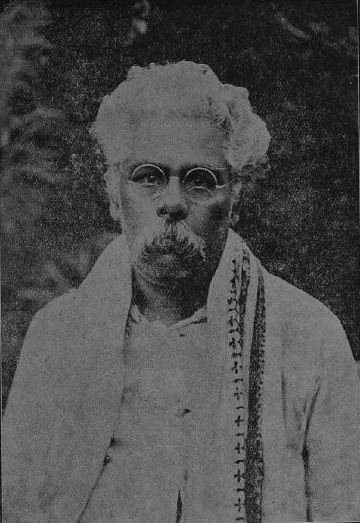
The Justice Party faded; something more radical replaced it. E. V. Ramasamy — “Periyar” — broke with the Congress in 1925, disillusioned with its Brahmin leadership, and built the Self-Respect Movement: rationalist, atheist, fiercely anti-caste, and years ahead of its time on women’s equality. Its “self-respect marriages” dispensed with the Brahmin priest and the Sanskrit mantras entirely — a caste institution abolished by simply walking around it.
[Documented] And here the parallel with this site’s hinge is exact: Periyar, like Ambedkar at Mahad, attacked the sacred texts in public — he organised burnings of the Manusmṛti and of images of the gods, and campaigned against the scriptural sanction for caste. Two men, two burnings, one target.
Where the two giants disagreed — and why it matters here
They respected each other, but they did not agree, and the disagreement is one this site has to be honest about because it cuts toward the anti-caste side.
[Debated] Periyar’s Dravidian ideology rested on a racial story: that Dravidians were the subjugated original inhabitants and Brahmins the descendants of Aryan conquerors. It was politically powerful — and it is exactly the “foreign invader = upper caste” narrative the genetics page warns against. Modern ancient-DNA work keeps genes, language and caste on three separate tracks; a migration is not an invasion and a haplogroup is not a caste. Tellingly, Ambedkar rejected the Aryan-race theory of caste outright (Who Were the Shudras?, 1946). So the two great anti-caste leaders parted on precisely the point this site flags as a distortion — and we do not get to exempt Periyar from the standard we apply to everyone else.
The other unevenness
[Debated] One more honest caveat. The “non-Brahmin” banner united everyone below the Brahmin — but that coalition contained both dominant Shudra castes and Dalits, whose interests diverged. In practice the movement’s early gains flowed first to the dominant non-Brahmin castes; Dalit advance within it lagged — the same OBC-before-Dalit unevenness the reservation debate still turns on. The varna-versus-jati gap this site keeps returning to is written all over the southern story.
Why it belongs here
The payoff arrived first in the South: the Dravidian parties (the DMK, from 1967) permanently ended Brahmin-Congress dominance in Tamil Nadu — Jaffrelot’s “silent revolution,” decades early. Periyar shows that the assault on the old code was never a single man’s work, that reservation was tested in India before it was constitutionalised, and that even a revered liberator can carry a distortion worth naming. The road out of caste had more than one lane — and this site owes it to the record to drive down the other one too, warts and all.